

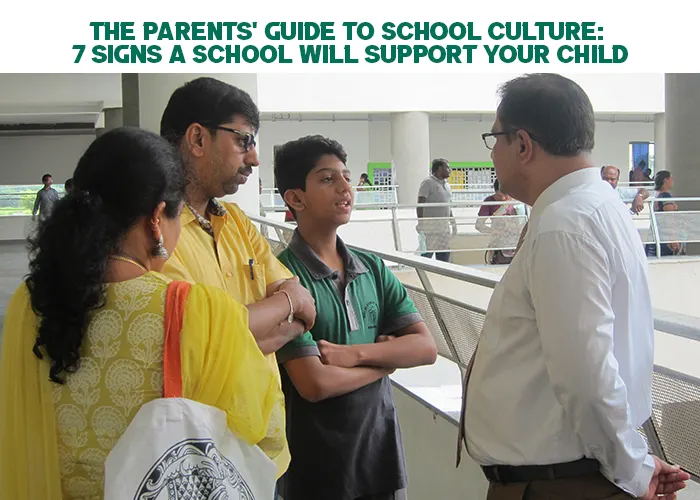
A school’s culture is a crucial aspect of the academic, emotional, and social success of students. What makes for a good school culture isn’t just about academics, but supporting, respecting and motivating students. The right school culture is directly linked to the school environment and child development, influencing their confidence, curiosity, and kindness.
Every parent wants their child to grow in an environment that feels secure and promotes student engagement. Hence, parents must be picky when choosing the right school for their child. DPS Warangal school environment is one such example that briefly focuses on maintaining student support, community, and culture. Our community highlights the importance of school culture for students to ensure every child flourishes in their field.
This blog is a parent guide to choosing schools and recognising signs of a supportive school. Let us see ways through which parents can learn how to evaluate a school’s culture mindfully.
What do we mean by “school culture”?
School culture is a set of shared values, behaviours, and environment within a school that shapes student interactions. A positive school culture reflects how a school fosters trust and respect within its community. Research indicates that a healthy culture improves student engagement, creating a perfect balance between school values and student well-being.
For Indian parents, how your child is treated must stand above the modern infrastructure or buildings. From student-peer interactions to the way teachers encourage students to grow, the school’s actions matter. It shows their true values in supporting and creating a space of belongingness for the students to prosper in.
7 signs that the school will support your child
#Sign 1 – Welcoming & Inclusive Environment: An inclusive environment goes a long way in building a positive culture. Staff greeting teachers/parents and diversity in classrooms create a strong community within the school environment. Parents must ask questions like “How do you welcome new families?” or “How do you support students from different backgrounds?” to have a better understanding of the school’s culture and values.
#Sign 2 – Strong, Respectful Relationships Between Students & Adults: Positive teacher-student relationships remain central to good culture. Teachers who interact and know students by name, and approachable staff, make it easier for students to connect with people, beyond academics. It is necessary to ask about what happens if a student feels socially isolated and to understand how teachers connect with children beyond academics.
#Sign 3 – Student Voice, Participation & Leadership: The culture improves when students feel valued and have a voice of their own. Clubs and student councils are great opportunities to shape children through leadership. A healthy school culture must influence students’ school life by offering leadership opportunities like MUNs, sports or any other extra-curricular activities. Here, every student gets a chance to learn, lead and explore their potential.
#Sign 4 – Clear Communication & Parent-School Partnership: A strong parent-school partnership is another factor that actively improves outcomes and school culture. Look out for regular updates, parent-teacher meetings and other multiple channels of communication. Parents must be on ways to stay informed about their child’s social and emotional progress and other feedback channels.
#Sign 5 – Holistic Focus (Beyond Academics): A school that emphasises school values and student wellbeing is likely to be more holistically focused than only academically. “How does the school support a child’s social-emotional development?” or “What opportunities exist outside the classroom?” are some questions that parents must keep in mind during the process.
#Sign 6 – Consistent Values & Expectations: Consistency goes a long way when looking for long-term partnerships. Having consistency between the school’s mission and values, staff modelling behaviour, what is said and what is done builds trust and culture. A parent should inquire about how the school’s core values are implemented in daily school life to gain a better understanding of its culture.
#Sign 7 – Safe, Supportive & Growth-Mindset Environment: Research states that when students feel safe and valued, they engage better. Defined policies for bullying and inclusive discipline are some signs of a supportive school. The school’s approach to mistakes and failures/failures and its commitment to ensuring students’ physical and emotional safety speak volumes about the growth mindset of the school.
How DPS warangal exemplifies a supportive school culture
At DPS Warangal, positive school culture is not a goal, but a daily life necessity. The classroom practices are all guided by school values and student well-being. Our school ensures a strong parent-school partnership and an inclusive programme, all with the focus on students’ holistic growth.
Parents exploring how to evaluate a school’s culture can visit DPS Warangal to experience this firsthand. Parents can tour the campus, meet faculty and interact with students to know more about the school’s atmosphere. Our school stands as a strong example of a supportive school that helps children participate, grow and lead.
How you (as a parent) can evaluate school culture in practice
As parents, try to plan your visit at different times of the day, like morning assembly, lunch break, and parent-teacher meetings, to observe what makes a good school culture. Ask for student and family testimonies to get genuine insights into the school environment and child development. Along with this, engage in conversations with existing parents to get feedback on their experiences.
When visiting, review defined policies like anti-bullying, inclusion and parent involvement to see if they reflect a supportive school mindset. Look out for how the school acts when challenges occur. Lastly, involve your child and ask how they feel on campus, whether they feel welcome, and if they can find respectful connections between students and teachers.
Final checklist for parents
Here’s a quick checklist you can carry when visiting schools to understand their school culture better. Tick each box that feels true and achieved. It’s a simple way to see if the school offers the right and supportive environment where your child can learn and grow.
- I saw families being welcomed by staff.
- Teachers seemed approachable and connected with children.
- Students actively participated and seemed happy and confident
- School maintained open communication through regular updates, meetings and feedback channels
- There was a clear focus on the holistic school environment and child development
- The school’s mission, values, and daily actions matched, showing consistency and care.
- Policies for safety, discipline, and mental health were visible and supportive of every student.
Conclusion
In conclusion, choosing the right school for your child is much more than curriculum and building, and is more about its core values. The school culture defines the kind of individual your child grows up to be. This parent guide to choosing schools supports your child to learn and thrive in a safe and supportive environment.
DPS Warangal school environment adopts this positive school culture and becomes a launch pad for your child’s growth. When families, teachers, and students share mutual respect, the school environment transforms into a place where children feel safe to explore, learn, and lead.We encourage parents to plan a visit to observe what makes a good school culture and learn how to evaluate a school’s culture. Feel free to ask as many questions and trust your gut when looking out for the right environment for your child to thrive in!