

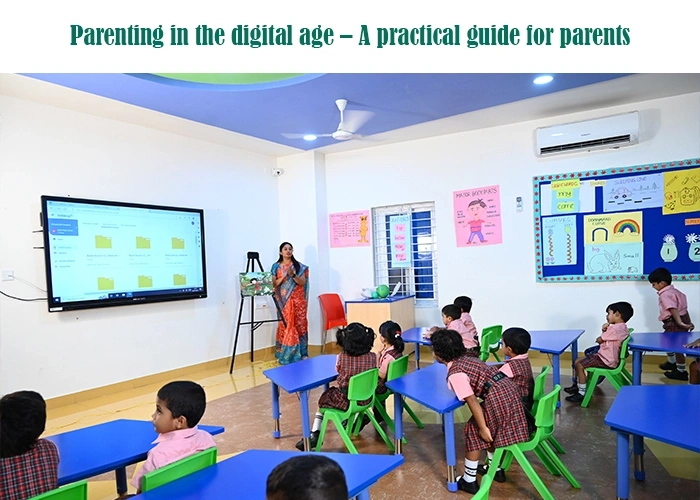
We often see our kids glued to the screens at the dining table, and how mindlessly they keep scrolling through screens for hours. Statistically, on average, a child spends about 4 to 7 hours daily on screens. This is a common issue that bothers parents in the digital era.
Parents are the primary role models when it comes to introducing children to the world of technology. Parenting in the digital age involves ensuring open communication when discussing tech with them.
However, it is equally important to bring forth the dual nature of technology that hinders healthy screen habits. Offering a gateway to learning and creativity, tech also has a dark side, unknown to many, that often disrupts the child’s technology balance. Misuse of technology may give access to illegal content, unsafe for children to consume.
This blog explores some practical tips for parenting in the digital age to help parents ensure responsible screen use for kids. Let us dive deeper to learn how we can instil digital well-being and healthy tech habits for kids.
The Digital World – Pros & Cons
The digital world can be easily understood by dissecting it into two different tangents–Pros and Cons. Technology offers easy access to knowledge through interactive learning resources. It allows you to connect and socialise with people worldwide. People also resort to various games and online learning safety for kids as a means of creative expression.
However, what people don’t realise is the risk of encountering cyberbullies and predators online. The risk further includes addiction to screens and serious mental health concerns as signs of cyberbullying in teenagers.
Online Risks for Children & How to Prevent Them
In recent times, children have been engaging in spending hours doing endless scrolling, popularly known as ‘doomscrolling’. Mindless scrolling can have a significant impact on health, leading to eye strain, sleep disturbances, and reduced focus. Spending too much time on the phone replaces physical activity, causing further obesity risks.
Another risk that children may encounter is cyberbullying and harmful content consumption. It is common for online predators to harass consumers via posts, texts, and even games. Doomscrolling also gives access to violent and explicit information, causing serious emotional effects like stress, withdrawal and low self-esteem in children. For cyberbullying prevention for kids, parents should monitor the content their child interacts with and encourage open communication. It is essential to teach kids to block and report the bullies, or if they find anything suspicious.
It often happens that predators disguise themselves as friends in social apps or games. They build trust to exploit kids. Children should be aware not to share any personal information or details with strangers online. Parental control apps can be of good help for such cases. It allows parents to control apps, track chats and block any unsafe sites for their kids.
Parents should teach their children how ‘excess of everything is bad’, and can lead to anxiety and depression. Social media also creates a feeling of inferiority when comparing oneself with peers, thus causing low self-esteem. This further leads to grumpiness, isolation, and mood swings in teens. However, regular family routines like no-device meals or board games can encourage kids to live real life instead of reel life.
Using screen time recommendations for kids shows how to reduce screen time for children.
Age-Wise Screen Time Recommendations
As per the WHO and AAP, there are certain guidelines on how to limit screen time for toddlers. You can implement screen time recommendations for kids to ensure a balanced digital well-being.
- 0–2 years: Kids are allowed no screen time during this period. Only video calls can be excused.
- 2–5 years: For 5-year-olds, you can allow kids to interact for a maximum of 1 hour a day. Parents can co-view with their children to support the high-quality content of the device.
- 6–10 years: The screen time can be increased to 1–1.5 hours per day. Content can be a balance of education and recreation. It is advised to take regular breaks for the eyes to rest and maintain a correct posture.
- 11–18 years: Screen time can be exceeded to 2 hours per day for recreational purposes. These online safety tips for parents ensure a balanced and responsible use of resources.
Positive Parenting Strategies
Listed below are positive parenting strategies that parents can implement with their kids. This will not only ensure less screen time by age but also help you keep a check on their content consumption.
Smart Screen Time Rules: Parents should make healthy rules with their kids to ensure cooperation from both sides. One such rule can be setting up tech-free times, like in the bedroom or at the dining table. Fix a daily schedule to define screen time by age, balanced with other real-world activities. You can also choose age-appropriate content for your child to watch and guide them simultaneously.
Open Communication: Parents should encourage their kids to ask as many “Who-What-Where-When” questions. Through this, kids build a safe space and share freely with their parents. Thus, they can talk about their day-to-day online activities and share if they find anything suspicious online. On the other hand, parents are advised to listen without judgment. Rather, be a role model for your child as they navigate the digital world.
Digital Literacy Skills: Along with keeping a regular check, kids need to be digitally literate about the tech world. Parents need to teach their kids online manners and to respect other users by spreading no hate. Moreover, be aware of sharing data online. Use strong passwords and be careful of oversharing with other users. Teach kids to deal with bullies by reporting and blocking them.
Parental Controls: Parents can also make use of parental controls apps like Bark, Qustodio, and Google Family Link. These private settings will allow you to set timers and limits for your child’s online consumption. Make sure you do not invade their privacy, but are protective of their usage. Teach kids about these controls being a means of online safety tips for parents, and not spying.
Unstructured Play of Balance: Unstructured play is defined as free play for kids that promotes problem-solving skills and developing resilience in children’s digital age. Parents need to schedule out unstructured play time for kids in a fun way, which includes indoor play and outdoor play. Boredom needs to hit, as it sparks creativity in children. Make sure not to intervene in their playing process, and let them explore and learn things on their own.
Parenting in the digital age is a combination of both–balancing screen time by age and ensuring real-time growth. Parents’ primary focus should be to raise confident, self-aware and digitally literate individuals. Parents, as the only role models, should encourage open talks and boundaries for children to feel safe with them. Implementing the online safety tips for kids can be of great help to achieve a secure digital environment for kids. We highly encourage parents to adopt these strategies and share their experiences with us. For more digital parenting tips and guides, feel free to visit and explore DPS Warangal’s website!