

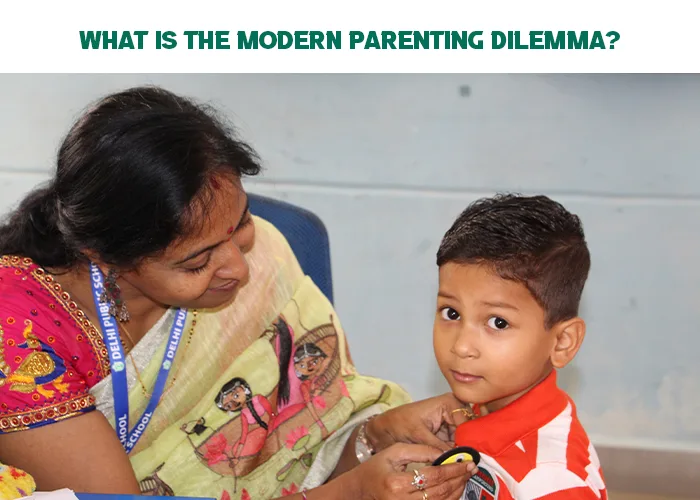
It’s hard to be a parent, but it’s never been harder than it is now. The modern parenting dilemma: how do we balance freedom and rules?
On one hand, parents want their children to be self-reliant, innovative, and confident. On the other hand, they want order and discipline. Finding the equilibrium between the two is a challenging task.
Schools of DPS Warangal recognize this challenge. They also understand the importance of collaboration between parents and teachers in promoting the children’s self-responsibility and a balance between freedom and discipline.
What has changed in parenting in the 21st century
Parenting today looks very different from what it did a generation ago. We live in an age where there’s far more awareness of children’s rights, emotional needs, and mental well-being. Parents now understand that nurturing empathy, creativity, and decision-making skills are just as important as enforcing rules. What hasn’t changed is a seeming war between generations where each gen thinks they’re right, while the other isn’t understanding what’s right and wrong.
And while parenting itself is harder, kids also face complex environments where the pressure to succeed, and perform is much higher. Children today must deal with immense academic pressure, the influence of social media, and the distractions of a digital world. They are growing up in a world where the ability to self-regulate is demanded, a complex skill involving both liberty and discipline.
Traditionally, many Indian households followed an authoritarian model, where parents made the rules, and children obeyed. There is now a range of parenting styles, from being gentle and letting kids do what they want to free-range parenting, where children are free to explore everything on their own terms.
While this process of development is healthy, it also creates confusion. Parents fear being too strict and destroying their child’s confidence, but they also fear being too gentle and having children who lack order. This constant conflict describes the modern parenting dilemma.
Knowing the parenting discipline vs freedom
Discipline: the roots
The word “discipline” often gets misunderstood. It’s important to focus on developing habits, self-control, and respect for one’s commitments rather than punishment.
Constructive discipline helps maintain a positive and supportive atmosphere while also builds time management skills, develops a sense of responsibility, and consistency for a child. Often parents think their role is to be friendly towards kids – but that is only after a specific age. The early years of a child are for boundary setting, and helping them develop skills and attributes useful for navigating in the world. When kids don’t have a disciplined life at home, they fail to integrate well into school. It’s one of the reasons children succeed in settings with a structure, such as boarding schools and day schools.
Without boundaries, children feel lost. Routine teaches them how to prioritize, manage their impulses, and stay grounded, essential life skills that shape their success.
Freedom: the wings
Freedom is about autonomy. When parents give children the opportunity to make some decisions, you are providing your kids the opportunity to grow.
Freedom helps children learn responsibility through experience. It teaches them that actions have consequences, good or bad, and builds confidence in their ability to make decisions. Starting with small decisions about choosing their outfits (at an early age), to choosing how they structure their day gives kids a huge sense of control.
From choosing their extracurriculars to managing free time, giving children controlled independence encourages creativity, resilience, and problem-solving traits that will serve them well as adults.
Freedom and discipline: are both important?
Lots of people who work in education say, “Freedom without discipline leads to chaos, and discipline without freedom stifles growth.” In other words, children need roots and wings, roots to stay fixed and wings to explore.
The art of modern parenting is finding a balance between structure and freedom. Structure that guides, not controls, and freedom that empowers, not overwhelms.
The challenges of parenting
Finding the right balance between freedom and discipline isn’t just a thought. It’s a task that we face every day in the real world. At times, if you let your child walk from Point A to Point B, so they develop self-confidence, many people judge that decision. Similarly, asking young kids to carry bags is viewed with criticism.
Fear of being judged
A lot of parents worry about being judged by their kids’ teachers, their friends, or other parents. This stress can make us either too strict or too lenient to make up for it. When choosing your parenting style, be clear about how you want to inculcate this spirit of autonomy with your child, and be prepared to be judged.
The digital era
Screens, games, and social media test both a child’s self-discipline and a parent’s patience. Which should you do: trust or limit? It’s always being debated about. Each family needs to develop their own rules, and guardrails therefore of what independence and autonomy look like. In some cases, it may look like a no-phone policy till your child turns 18, or in others, a phone with limited apps, and limited features might be the norm. In either scenario, parents –make a conscious decision for your children.
Academic competitions
When it comes to education, parents overwhelmingly advocate discipline, but children may become uncurious and lose the ability to communicate. Choose the right type of academic competitions for your child, or collaborate with teachers.
Transitions to and from school
Both parents and children find it hard to go from living at home to a structured place like DPS Warangal’s boarding or day school. Parents seek control; children crave freedom. The school’s impartial setup helps close this gap.
Developments in indian culture
It can become challenging to find a balance between modern approaches to the child as well as the valuing of leadership and authority. Moreso, if you’re also living with older generations, they tend to follow their own parenting styles, while being a lot more relaxed with grandchildren. As a result, you may find enforcing discipline much harder. Negotiate your boundaries, and teach your children that your rules need to be followed.
Practical framework: how to balance discipline & freedom
How can parents manage this balance? Here are some parenting strategies for modern parents that mix structure with freedom and help kids with positive discipline.
Set clear, age-appropriate boundaries
While rules are helpful, they can also feel stifling if they’re overly rigid. Being consistent, with some flexibility allows good structure, with clear consequences. It also demonstrates why rules are necessary. Rather than stating, “No phones at dinner,” you could say, “Family time is for connection, not screens.”
Offer choices within boundaries
Instead of dictating every decision, allow limited choices. For example: “You can pick either music or sports this term.” This approach respects the child’s autonomy while ensuring balance.
Model the behaviour you expect
Kids copy what they observe. By showing responsibility, punctuality, and healthy screen habits, they’re more likely to screen and imitate other healthy habits. Remember, if you’re glued to your screen as soon as you get home, or typically are staring at your screen while conversing, your kids see that it’s OK to be attached to the phone all the time. And while adult cognition might be relatively unaffected, children’s brains cannot handle the constant dopamine rush.
Collaborate and communicate
Encourage family discussions about family rules. Set aside time to hear your child’s thoughts and make changes as a family. DPS Warangal implements this collaborative approach in parent-teacher meetings and mentorship programs, creating alignment between home and school.
Use natural consequences
Focus on the natural consequences of a situation instead of a punitive approach in order to teach better lessons. Say, for example, a child forgot their homework. Rather than giving the child additional chores, allow them to face the teacher’s consequences.
Create structured freedom zones
Assign “freedom times” at weekends, during hobby hours, or as screen breaks when children can decide freely what to do. Match these with planned periods for studies and routines, just like DPS Warangal integrates studies with activities.
Periodic review and adjustment
Children grow, and so should your parenting approach. Regularly discuss your family rules together. This makes your child/children feel heard. This is a step away from typical Indian parenting styles where kids are seen; but heard but as we evolve with newer generations, parenting approaches also demand refreshed methods.
How schools like DPS warangal support this balance
The schooling system influences children’s concept of freedom and discipline.
DPS Warangal is one of those institutions that help parents in achieving this. The school’s well-planned activities instill the values of being on time, being disciplined, and being committed. At the same time, the clubs, the sports, and the creative extra activities give opportunities for & creativity exploration. A strong sense of self means kids are ready to take on responsibilities, raise their hand for activities and be self-assured about their ability to take on challenges.
In both boarding and day school environments, students experience independence within clear boundaries, a real-life model of the “roots and wings” philosophy. This idea essentially states that when kids have a strong foundation (roots), they have the ability to grow new wings (freedom).
The school also encourages positive engagement between the school and the parents by organizing workshops and offering counselling sessions, working towards the same objective of nurturing children who are confident, responsible, and emotionally mature.
Checklist for parents
Here’s a quick checklist you can use to apply these ideas at home.
- Hold a family meeting every Sunday to discuss plans and issues openly.
- Define three non-negotiable rules (like honesty, study hours, or bedtime) and three flexible ones.
- Offer two choices for each rule; this maintains structure while encouraging ownership.
- Model one discipline habit each week, such as “no screen time after 8 PM.”
- Let your child pick a weekend activity and reflect on it together.
- Stay connected with your child’s school, attend workshops, or schedule time with mentors at DPS Warangal.
Remember, flexibility is key. What works for your 8-year-old today may not work when they’re 13. Adaptation is a sign of mindful parenting, not inconsistency.
Wrapping it up
The modern parenting dilemma isn’t about picking between balancing strictness and freedom; it’s about finding balance. Children thrive when they have both structure and space when parents combine clear expectations with trust and empathy. By practicing effective discipline techniques for kids, promoting gentle yet firm boundaries, and working with supportive schools like DPS Warangal, parents can know how to raise responsible children.
This week, as you think, ask yourself:
- What can I do to give my kid more freedom?
- Where could a bit more structure help them grow?
These days, the real art of parenting is finding that balance between roots and wings.